A busy centre
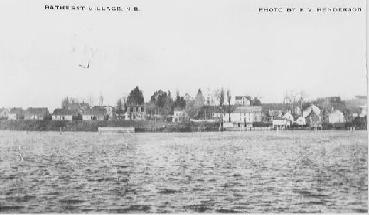
The Bathurst Harbour historically has been a busy centre. From the early 1830s until late in the century, the village was dependent on ship building. As ship building declined, Bathurst began to depend on its wood resources. Pulp and paper remains a mainstay in the area to this day.
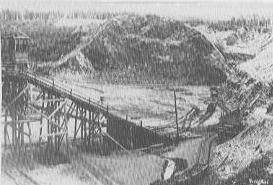
By the late 1950s, Bathurst also began to depend on its mineral resources. Extensive deposits of lead, zinc and silver were discovered. People flooded to the area, and the "Bathurst Rush" was on!
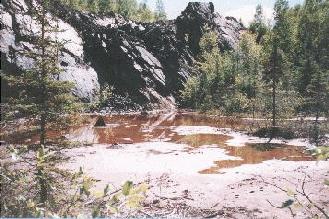
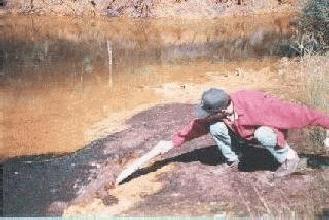
Unfortunately, this dependency on natural resources has not come without some environmental degradation and effect on our local flora and fauna. For example, in the 1960's, poaching, ruined stream habitat, lost spawning grounds, overfishing both locally and commercially off Greenland resulted in a huge decline of salmon throughout New Brunswick. In 1969, our own Nepisiguit River saw most of its juvenile salmon killed by waste sulphide dump runoff from a nearby mining operation. This large kill also resulted in an avoidance reaction which prevented returning adults from entering the river to spawn.
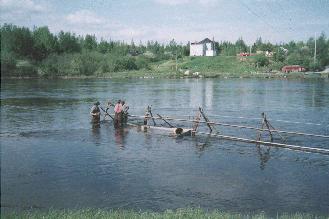
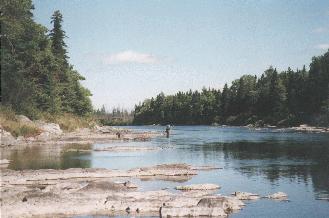
Luckily, through the hard work of organisations like the Nepisiguit Salmon Association, more effective management and regulations were put in place and the salmon "spawned" their way back. The total return of salmon (both grilse and salmon) to the Nepisiguit River in 1994 was approximately 3000. If developed to its full potential, it is anticipated that the river could support 25,000 to 30,000 fish.
Bathurst watershed history
Bathurst Heritage Trust Commission was established in 1988 on motion of Bathurst City Council and incorporated in 1989. Long term goals include:
- recognition of the need to preserve our local history and historic buildings;
- a strategy to raise public awareness; and
- establishing and maintaining a system of historical research pertaining to the Bathurst Watershed area.
The Micmacs were the first known group of people to settle in the area once called Winkapiguwick. In the 1600's, the Governor of Acadia established the fishing settlement known as Nepisiguit. This settlement finally became Bathurst in 1826 after the Earl of Bathurst, who was then Colonial Secretary.
Development of this area has been dependent on its natural resources and its enterprising and hard working population. During the 1800's, the Bathurst Watershed depended on ship building. When the era of wooden ships ended, the area began depending on lumber and pulp mills. Since the mid-1950s, extensive mining operations have also played a large part in our growth and development.
In terms of cultural awareness, our Watershed has changed over the centuries. The city has a good combination of French, English, Irish and Scots, to mention only a few of the major nationalities. Overall, the Nepisiguit Watershed is rich in cultural and historic features.
For more information: Bathurst Heritage Trust Commission.
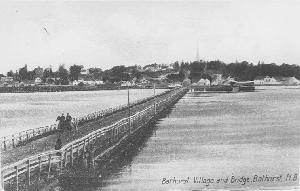
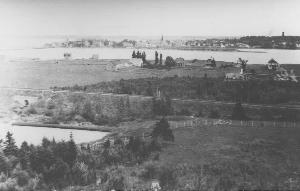
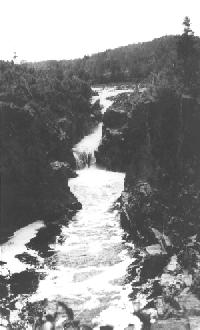
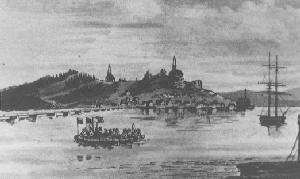
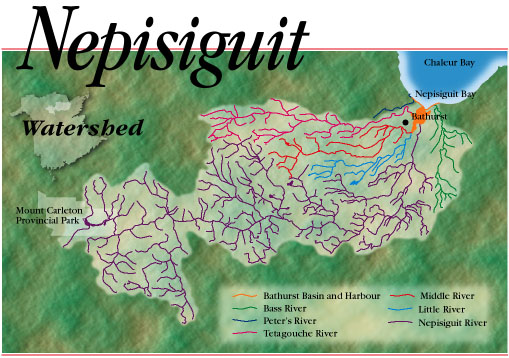
Bathurst / Nepisiguit Watershed project area
The watershed and its rivers: the Nepisiguit, Middle, Little, Tetagouche, Peter's and Bass Rivers, and the Bathurst Basin and Harbour.